Could Events in 2026 be the right way into the world of padel?
Most adults do not struggle because they hate exercise. They struggle because exercise often feels lonely, repetitive or too big a commitment from the start.
That is why so many well-meant fitness plans fade out. The intention is there. The motivation is strong for a week, then work gets busy, the weather turns, energy dips, and the routine disappears.
What tends to last is not always the most intense form of exercise. It is the form of exercise people actually look forward to doing again.
This is one reason padel has grown so quickly. It gives people movement, competition, laughter and social connection in the same hour.
Why padel feels easier to start than many other sports
Some sports are rewarding only after you get past the awkward early phase. Padel is different. You can enjoy it very quickly.
The court is smaller than a tennis court. Most sessions are played as doubles, which instantly reduces the pressure on any one person. The rallies are often longer than complete beginners expect, and because the walls keep the ball in play, the game stays lively even when nobody is particularly polished.
That creates something rare in adult sport: beginners can feel involved almost immediately.
For many people, that is the difference between trying a sport once and sticking with it.
There is also a psychological benefit that should not be overlooked. Traditional exercise can feel transactional: burn calories, hit reps, get through the session. Padel feels more playful. People become absorbed in the rally, the score, the movement and the chat between points. The session passes quickly because attention is on the game rather than the effort.
That does not mean it is not good exercise. Quite the opposite. It simply means the effort is wrapped in enjoyment.
The fitness benefits beginners notice first
Beginners often start padel because a friend invites them, not because they are searching for a new training system. Yet after a few sessions, the physical benefits become hard to ignore.
The first thing many people notice is how much movement is packed into a short time. There is walking, shuffling, recovering, reacting, turning and accelerating in ways that feel more natural than slogging through cardio for its own sake.
Then there is coordination. Padel asks your body to organise itself quickly. You track the ball, adjust your feet, judge the bounce, react off the glass and reset for the next shot. That kind of movement is useful well beyond the court. It supports balance, body awareness and agility in a way that many adults do not train often enough.
If you want a good example of why this matters, Fitness Fighters has already covered how agility ladder training can improve footwork, coordination and movement quality. Padel gives people a more playful route into some of those same qualities, especially if they are not the sort of person who wants to spend their evening doing drills in a garage.
It also encourages consistency, which is where the real fitness value lies. A brutal workout done once in a while is less useful than regular activity that becomes part of the week. Padel has a habit of becoming that regular activity because it feels social and rewarding from the outset.
Padel is social accountability in disguise
One of the biggest reasons people abandon exercise is that no one notices when they stop.
Skip a solo run and life moves on. Miss a gym session and nobody cares. Cancel a class and you can always tell yourself you will restart next week.
Padel works differently because it is social accountability in disguise.
You are not just exercising. You are meeting people. You are part of a booking. Someone is expecting you to show up. There is a conversation before the match, a laugh after a missed volley, maybe a coffee afterwards, and often a message about playing again next week.
That light layer of social connection makes a serious difference. It turns exercise from a personal obligation into part of your routine and community.
Beginner-friendly events could be the perfect way into padel
A lot of adults are open to exercise, but not to walking into a new club, alone, unsure of the etiquette, the level or whether everyone else will already know what they are doing.
As Matchpoint Marketing sees across the padel industry, this is where beginner-friendly padel events can make such a difference.
An event with a clear format feels safer. It gives people a reason to show up and a structure that removes uncertainty.
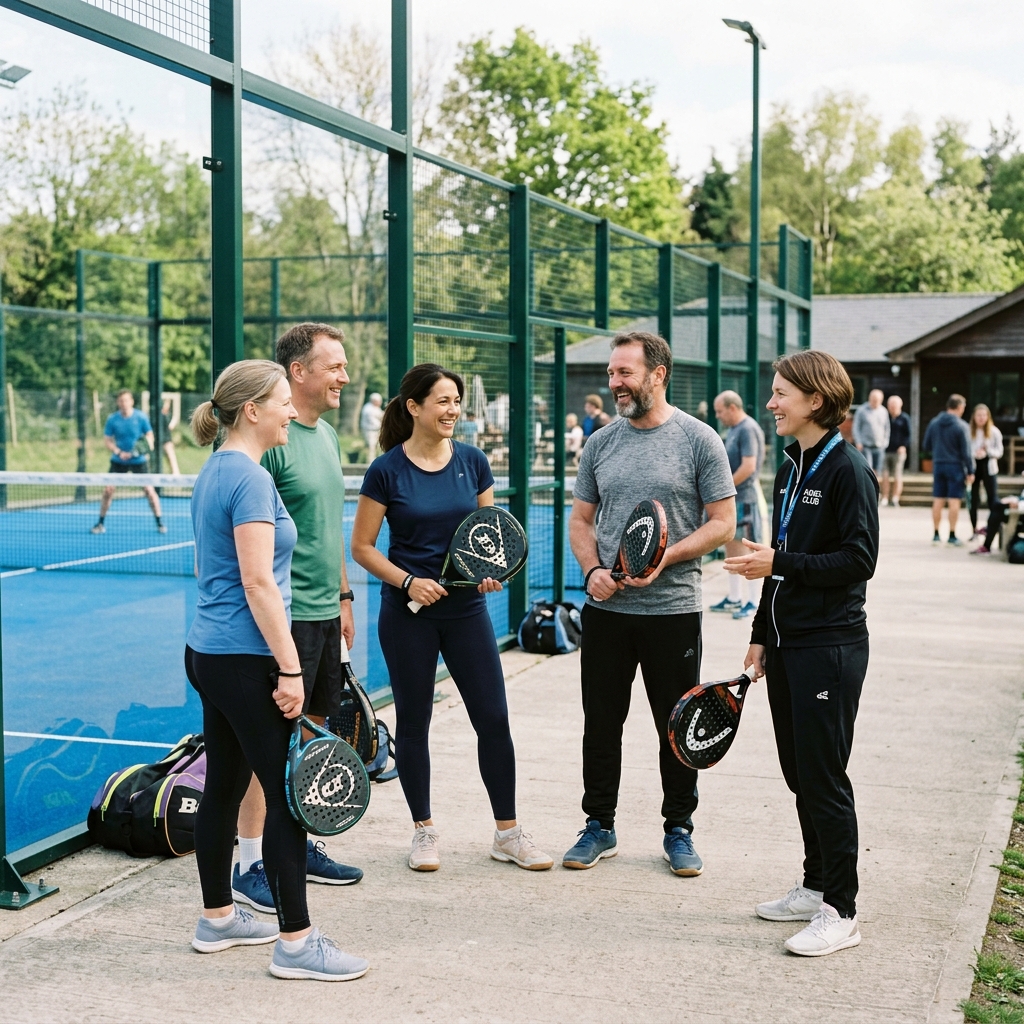
They make people feel welcome. You arrive knowing that the session is designed for people like you. There is a short introduction, a simple rotation, relaxed scoring and enough guidance to help everyone settle in quickly.
That small shift changes the emotional tone of the session. People stop worrying about being the weakest player there and start focusing on having a good time.
The event formats that keep people coming back
Not every event works equally well. The ones that tend to build real momentum share a few common traits.
- The first is People need to know what they are signing up for. If an event is labelled as a beginner social, an intro session or a mixed-level welcome event, the promise should match the reality.
- The second is structure. New players enjoy sport more when they are not left guessing. A short warm-up, a quick explanation of the format and a smooth rotation system can completely change how comfortable people feel.
- The third is social ease. Adults are more likely to stick with a sport when it helps them meet people without awkwardness. That is one reason doubles padel works so well. There is natural conversation built into the format.
- The fourth is progression. The ideal first event should not feel like a one-off novelty. It should make the next step obvious. That might be another social, a coached beginner session or a weekly community game.
A smart way to start safely
Padel may be accessible, but like any sport, it is easier to enjoy when you begin sensibly.
The simplest mistake beginners make is trying to do too much too quickly. Because the atmosphere is fun, it is easy to forget that your body is still dealing with changes of direction, repeated reactions and loads it may not be used to.
A proper warm-up helps. Comfortable footwear with good grip matters. So does giving yourself permission to build up gradually rather than chasing intensity from day one.
Basic strength work can help too, particularly for legs, core and general joint resilience. Fitness Fighters has a useful beginner-focused piece on a kettlebell workout programme that shows how simple strength work can support broader fitness goals. You do not need to become obsessed with supplementary training, but a little preparation goes a long way.
The good news is that padel does not demand perfection to be enjoyable. You can start where you are, improve naturally through play and let confidence build over time.
Author bio
This article was written by Matchpoint Marketing, a specialist marketing company focused on the padel industry. Matchpoint works with padel clubs, events and related businesses to help them attract more players, improve communication and build stronger communities online.